When the temperature drops across Eastern Ontario, a portable space heater can make a chilly room much more comfortable. A basement office, a drafty bedroom, or a living room that never seems to warm up can all benefit from a little extra heat.
But what happens when the nearest outlet is just out of reach? Grabbing an extension cord might seem like a simple solution, but it comes with serious electrical safety concerns.
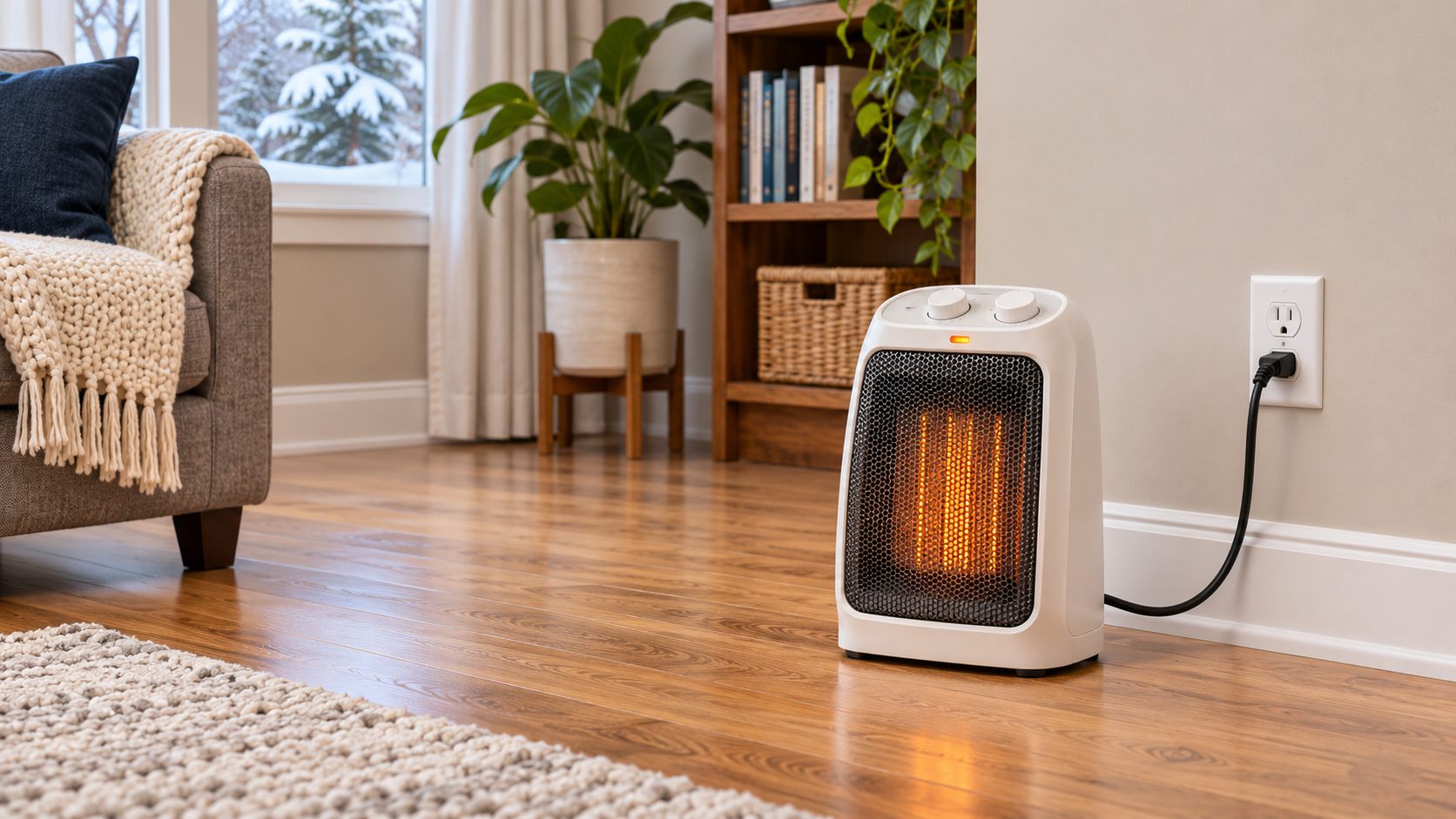
The short answer is no. Portable electric space heaters should be plugged directly into a suitable wall outlet, never an extension cord or multi-outlet strip. Both Health Canada and Ontario’s Electrical Safety Authority (ESA) recommend direct connections to reduce the risk of electrical fires.
Here’s why that matters and what you can do when your heater’s cord doesn’t reach.
Why Are Extension Cords Unsafe for Space Heaters?
Space heaters use a significant amount of electricity to generate heat, often running for extended periods during colder weather. That demand places stress on electrical connections, making the condition of your outlets, plugs, and wiring particularly important.
An extension cord introduces another connection between your heater and the wall outlet. If that connection is loose, damaged, or unsuitable for the electrical demand, it can overheat. Excessive heat can damage the plug, cord insulation, or nearby materials, increasing the risk of fire.
The concern becomes greater when cords are tucked behind furniture, covered by rugs, or routed through doorways. These arrangements can hide damage, expose cords to physical wear, and make it harder to spot potential hazards.
Extension cords are intended for appropriate temporary uses, not as permanent replacements for properly installed outlets. If your home regularly needs an electrical connection in a location without one, it’s worth considering a safer long-term solution.
What About a Heavy-Duty Extension Cord?
It’s a reasonable question. If a standard extension cord isn’t suitable for a space heater, wouldn’t a thicker, heavy-duty cord solve the problem?
Unfortunately, the answer is still no.
A heavy-duty extension cord may be appropriate for certain electrical tools or equipment, but that doesn’t make it a recommended connection for portable electric heaters. Health Canada’s guidance is clear: portable heaters should never be connected through extension cords.
The same advice applies to surge protectors and multi-outlet strips. These devices may be useful for certain electronics, but they aren’t a safe workaround for positioning a space heater farther from a wall outlet.
It’s tempting to assume a setup is safe when the heater appears to work normally. Electrical problems aren’t always immediately visible, and avoiding unnecessary connections is a simple way to reduce the risk.
How to Use a Space Heater More Safely
Portable electric heaters can be useful for supplemental heating when they’re selected, positioned, and operated correctly. A few practical habits can help protect your home and the people in it.
- Plug directly into a wall outlet. Never connect a portable heater through an extension cord, surge protector, or multi-outlet strip.
- Maintain a safe distance from combustible materials. Keep at least one metre between the heater and items such as curtains, furniture, clothing, and bedding.
- Check for Canadian electrical approval marks. Look for recognized certification marks such as CSA, cUL, or cETL when purchasing a heater.
- Inspect the heater and its cord. Check for damaged insulation, loose plugs, or other signs of wear. Stop using equipment that appears damaged.
- Turn it off when you’re finished. Unplug your portable heater before leaving home or going to sleep.
- Avoid overloading electrical circuits. Be mindful of other appliances and devices operating on the same circuit, particularly those with high electrical demand.
Your heater’s manufacturer may provide further instructions about placement, clearance, and appropriate operation. Follow those directions and avoid placing heaters in busy walkways or locations where they could be knocked over.
These precautions don’t require electrical expertise, but they can make a meaningful difference in reducing preventable hazards.
What If Your Wall Outlet Is Too Far Away?
Sometimes the challenge isn’t knowing how to use a space heater safely. It’s finding a practical place to put one.
Older homes, basement renovations, and converted workspaces don’t always have outlets positioned where they’re most useful. A heater might fit perfectly beside a desk or seating area, yet its built-in cord can’t reach the nearest connection.
The safest immediate option is to reposition the heater somewhere its original cord can reach a suitable wall outlet without stretching across walkways. The new location still needs adequate clearance from anything that could catch fire.
If that arrangement doesn’t work for your room, it may be worth having an electrician assess your outlet layout.
A licensed electrician can evaluate your existing circuits, determine whether another outlet would be appropriate, and identify any electrical limitations that need attention. In some homes, a new receptacle may be a straightforward improvement. Other situations may call for circuit changes or upgrades, depending on the existing electrical system.
At Beattie Dukelow Electrical, our residential electrical services include circuit troubleshooting, electrical inspections, and circuit installations or upgrades. We can help homeowners throughout Eastern Ontario find practical solutions for rooms that aren’t meeting their electrical needs.
When Your Space Heater Signals a Bigger Electrical Problem
A space heater that repeatedly trips a circuit breaker deserves attention. A breaker may be responding to an overloaded circuit, or another electrical problem may need investigation. Resetting the breaker repeatedly without identifying the cause isn’t a safe long-term solution.
Consider a basement office where a computer, dehumidifier, and portable heater are operating at the same time. Depending on the home’s wiring, these devices could share an electrical circuit, placing more demand on it than expected. Moving the heater to another outlet in the same room may not resolve the issue, since multiple outlets can share a circuit.
We explore this concern in greater detail in our article, Cold Weather, Heavy Loads: How Winter Pushes Your Electrical System to the Limit.
Other warning signs deserve immediate attention, including an unusually hot outlet, discolouration around a receptacle, crackling sounds, or a burning smell. If you notice any of these symptoms, stop using the affected equipment and have the issue assessed by a licensed electrician. Don’t touch or disconnect an overheated connection if doing so would put you at risk.
If you see smoke or fire, leave the building immediately and call 911.
A Warmer Home Without Electrical Guesswork
Staying comfortable through an Eastern Ontario winter shouldn’t require taking chances with your home’s electrical safety. A portable heater can provide useful supplemental warmth, but its location and electrical connection matter just as much as the heater itself.
For some homeowners, repositioning the heater may be enough. For others, inconvenient outlet locations or recurring electrical issues may point to the need for professional assistance.
If you’re concerned about an outlet, experiencing repeated breaker trips, or considering an electrical improvement, Beattie Dukelow Electrical is here to help.
Our local team provides professional residential electrical services throughout Eastern Ontario, with a focus on safe installations, reliable workmanship, and straightforward advice.
Contact Beattie Dukelow Electrical to discuss your home’s electrical needs and find the right next step.